Party Persistence
The EDK provides database persistence for parties, identities, contacts, and physical addresses. The persistence layer supports PostgreSQL, MySQL, and SQLite through a unified adapter pattern.
Overview
The party persistence system extends the IDK's party data models with:
- Multi-dialect support - Same API works with PostgreSQL, MySQL, or SQLite
- Unified adapter pattern - Dialect-specific SQLDelight databases behind a common interface
- Tenant isolation - All queries filtered by tenant ID
- Multi-tenant routing - Route to different databases per tenant
- Extended models - Contacts, physical addresses, electronic identifiers, registration numbers
Data Models
Core Entities
The persistence layer stores these entity types:
| Entity | Description |
|---|---|
| Tenant | Organizational isolation boundary |
| Party | Person, organization, or service |
| Identity | Role a party plays (issuer, verifier, holder) |
| CorrelationIdentifier | External identifier mapping (DID, X.509, email) |
| Contact | External party encountered during credential exchange |
| PhysicalAddress | Physical/postal addresses linked to identities |
Contact
Represents an external party discovered during credential exchanges:
data class Contact(
    val contactId: String,
    val partyId: String,           // Links to Party
    val tenantId: String,
    val firstIdentityId: String,   // First identity encountered
    val discoveryMethod: DiscoveryMethod,
    val notes: String?,
    val firstEncounteredAt: Instant,
    val createdAt: Instant,
    val updatedAt: Instant,
    val deletedAt: Instant?        // Soft delete
)
Discovery Methods:
| Method | Description |
|---|---|
MANUAL | Manually added by user |
X509_CERTIFICATE | Discovered from X.509 certificate |
OPENID_FEDERATION | Discovered via OpenID Federation |
CREDENTIAL_EXCHANGE | Discovered during OID4VP/OID4VCI |
IMPORT | Imported from external source |
AUTO | Auto-discovered by system |
Physical Address
Postal/physical addresses with validity periods:
data class PhysicalAddress(
    val addressId: String,
    val identityId: String,        // Links to Identity
    val tenantId: String,
    val addressType: AddressType,
    val label: String?,
    val isPrimary: Boolean,
    val streetAddress: String?,
    val city: String?,
    val province: String?,         // State/province/region
    val postalCode: String?,
    val countryCode: String?,      // ISO 3166-1 alpha-2
    val latitude: Double?,
    val longitude: Double?,
    val validFrom: Instant?,       // Address history support
    val validUntil: Instant?,
    val createdAt: Instant,
    val updatedAt: Instant,
    val deletedAt: Instant?
)
Address Types:
| Type | Description |
|---|---|
WORK | Work/office address |
HOME | Residential address |
BILLING | Billing address |
SHIPPING | Shipping/delivery address |
MAILING | Postal mailing address |
HEADQUARTERS | Organization headquarters |
BRANCH | Branch office |
LEGAL | Legal/registered address |
Identifier Extensions
Additional identifier types beyond the IDK's base correlation identifiers:
IdentifierElectronic - For EMAIL, PHONE, URL types:
data class IdentifierElectronic(
    val identifierId: String,      // Same ID as CorrelationIdentifier
    val electronicType: String,    // EMAIL, PHONE, URL
    val label: String?             // "Work Email", "Mobile", etc.
)
IdentifierRegistration - For registration numbers:
data class IdentifierRegistration(
    val identifierId: String,
    val registrationType: String,  // VAT, LEI, KVK, EIN, DUNS
    val issuingAuthority: String?, // Who issued the registration
    val jurisdictionCountry: String? // Country of jurisdiction
)
Unified Adapter Pattern
The persistence layer uses a unified adapter pattern to support multiple database dialects:
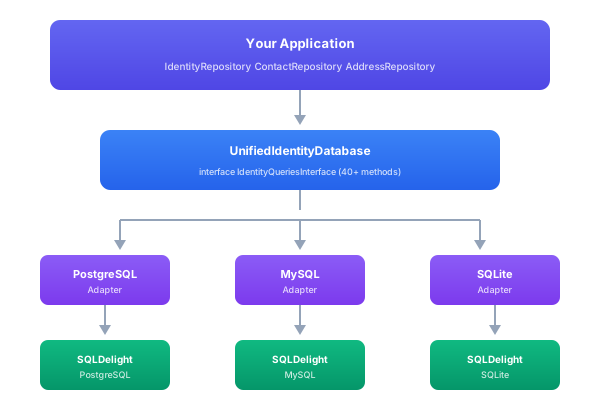
UnifiedIdentityDatabase
The common interface for all database operations:
interface UnifiedIdentityDatabase {
    val dialect: DatabaseDialect
    val identityQueries: IdentityQueriesInterface

    fun getRawDatabase(): Any  // For advanced/dialect-specific operations
}
IdentityQueriesInterface
The unified query interface with 40+ methods:
interface IdentityQueriesInterface {
    // Tenant operations
    fun findTenantById(tenantId: String): TenantRecord?
    fun listTenants(): List<TenantRecord>
    fun countTenants(): Long
    fun insertTenant(...)
    fun updateTenant(...)
    fun softDeleteTenant(...)

    // Identity operations
    fun findIdentityById(tenantId: String, identityId: String): IdentityRecord?
    fun listIdentities(tenantId: String): List<IdentityRecord>
    fun listIdentitiesByRole(tenantId: String, role: String): List<IdentityRecord>
    fun findDefaultIdentity(tenantId: String, partyId: String): IdentityRecord?
    fun insertIdentity(...)
    fun updateIdentity(...)
    fun softDeleteIdentity(...)

    // Correlation identifier operations
    fun findCorrelationIdentifierById(tenantId: String, id: String): CorrelationIdentifierRecord?
    fun findIdentityByCorrelationValue(tenantId: String, type: String, value: String): IdentityRecord?
    fun listCorrelationIdentifiersByIdentity(tenantId: String, identityId: String): List<CorrelationIdentifierRecord>
    // ... more methods

    // Physical address operations
    fun findPhysicalAddressById(tenantId: String, addressId: String): PhysicalAddressRecord?
    fun listPhysicalAddressesByIdentity(tenantId: String, identityId: String): List<PhysicalAddressRecord>
    fun insertPhysicalAddress(...)
    fun updatePhysicalAddress(...)
    fun softDeletePhysicalAddress(...)

    // Contact operations
    fun findContactById(tenantId: String, contactId: String): ContactRecord?
    fun findContactByPartyId(tenantId: String, partyId: String): ContactRecord?
    fun listContacts(tenantId: String): List<ContactRecord>
    fun insertContact(...)
    fun updateContact(...)
    fun softDeleteContact(...)

    // Filtered/paginated queries
    fun listIdentitiesFiltered(tenantId: String, filter: IdentityFilter, offset: Long, limit: Long): List<IdentityRecord>
    fun listContactsFiltered(tenantId: String, filter: ContactFilter, offset: Long, limit: Long): List<ContactRecord>
    // ... more filtered queries

    // Superadmin operations (cross-tenant)
    fun superadminListAllTenants(): List<TenantRecord>
    fun superadminFindIdentityById(identityId: String): IdentityRecord?
    // ... more superadmin methods
}
Repository Interfaces
IdentityRepository
High-level repository for identity operations:
interface IdentityRepository {
    // Read operations
    suspend fun findById(tenantId: String, identityId: String): Identity?
    suspend fun findAll(tenantId: String): List<Identity>
    suspend fun findDefault(tenantId: String, partyId: String): Identity?
    suspend fun findByCorrelationValue(tenantId: String, type: String, value: String): Identity?
    suspend fun count(tenantId: String): Long

    // Write operations
    suspend fun create(identity: Identity): Identity
    suspend fun update(identity: Identity): Identity
    suspend fun softDelete(tenantId: String, identityId: String, deletedBy: String?)

    // Correlation identifier operations
    suspend fun findCorrelationIdentifierById(tenantId: String, id: String): CorrelationIdentifier?
    suspend fun findCorrelationIdentifiers(tenantId: String, identityId: String): List<CorrelationIdentifier>
    suspend fun createCorrelationIdentifier(identifier: CorrelationIdentifier): CorrelationIdentifier
    suspend fun updateCorrelationIdentifier(identifier: CorrelationIdentifier): CorrelationIdentifier
    suspend fun softDeleteCorrelationIdentifier(tenantId: String, id: String, deletedBy: String?)
    suspend fun deleteCorrelationIdentifier(tenantId: String, id: String)
}
ContactRepository
Repository for contact operations:
interface ContactRepository {
    suspend fun findById(tenantId: String, contactId: String): Contact?
    suspend fun findByPartyId(tenantId: String, partyId: String): Contact?
    suspend fun findAll(tenantId: String): List<Contact>
    suspend fun findFiltered(tenantId: String, filter: ContactFilter, offset: Long, limit: Long): List<Contact>

    suspend fun create(contact: Contact): Contact
    suspend fun update(contact: Contact): Contact
    suspend fun softDelete(tenantId: String, contactId: String, deletedBy: String?)
}
PhysicalAddressRepository
Repository for address operations:
interface PhysicalAddressRepository {
    suspend fun findById(tenantId: String, addressId: String): PhysicalAddress?
    suspend fun findByIdentity(tenantId: String, identityId: String): List<PhysicalAddress>
    suspend fun findPrimary(tenantId: String, identityId: String): PhysicalAddress?

    suspend fun create(address: PhysicalAddress): PhysicalAddress
    suspend fun update(address: PhysicalAddress): PhysicalAddress
    suspend fun softDelete(tenantId: String, addressId: String, deletedBy: String?)
}
Multi-Tenant Routing
TenantDatabaseRegistry
Stores the mapping between tenants and their database configurations:
interface TenantDatabaseRegistry {
    suspend fun getTenantDatabaseConfig(tenantId: String): TenantDatabaseConfig?
    suspend fun registerTenant(tenantId: String, config: TenantDatabaseConfig)
    suspend fun unregisterTenant(tenantId: String)
    suspend fun listTenants(): List<String>
    suspend fun listTenantsByDialect(dialect: DatabaseDialect): List<String>
    suspend fun isRegistered(tenantId: String): Boolean
    suspend fun enableTenant(tenantId: String)
    suspend fun disableTenant(tenantId: String)
}
TenantDatabaseRouter
Routes database operations to the correct tenant database:
interface TenantDatabaseRouter {
    suspend fun getDialectForTenant(tenantId: String): DatabaseDialect
    suspend fun getDatabaseForTenant(tenantId: String): UnifiedIdentityDatabase
    suspend fun hasTenantDatabase(tenantId: String): Boolean
    suspend fun invalidateCache(tenantId: String)
    suspend fun invalidateAllCaches()
    suspend fun isHealthy(tenantId: String): Boolean
}
Usage Example
@Singleton
class PartyService @Inject constructor(
    private val router: TenantDatabaseRouter
) {
    suspend fun getIdentitiesForTenant(tenantId: String): List<Identity> {
        // Get the correct database for this tenant
        val database = router.getDatabaseForTenant(tenantId)

        // Query using unified interface
        val records = database.identityQueries.listIdentities(tenantId)

        // Map to domain objects
        return records.map { it.toIdentity() }
    }

    suspend fun findContactByDid(tenantId: String, did: String): Contact? {
        val database = router.getDatabaseForTenant(tenantId)

        // Find identity by DID correlation
        val identity = database.identityQueries
            .findIdentityByCorrelationValue(tenantId, "DID", did)
            ?: return null

        // Find contact for that party
        return database.identityQueries
            .findContactByPartyId(tenantId, identity.partyId)
            ?.toContact()
    }
}
Database Provider Architecture
DatabaseProvider
Abstracts database connections:
interface DatabaseProvider {
    val dialect: DatabaseDialect

    fun getDatabase(): Any  // Dialect-specific SQLDelight database
    fun close()
    fun isHealthy(): Boolean
}
DatabaseProviderFactory
Creates providers with optional connection pooling:
interface DatabaseProviderFactory {
    val dialect: DatabaseDialect

    fun create(config: DatabaseConfig): DatabaseProvider
    fun createPooled(config: DatabaseConfig, poolName: String): DatabaseProvider
}
Dialect-Specific Factories
Each database dialect provides its own factory:
PostgreSQL:
class PostgresDatabaseProviderFactory : DatabaseProviderFactory {
    override val dialect = DatabaseDialect.POSTGRESQL

    override fun createPooled(config: DatabaseConfig, poolName: String): DatabaseProvider {
        val hikariConfig = HikariConfig().apply {
            jdbcUrl = "jdbc:postgresql://${config.host}:${config.port}/${config.database}"
            username = config.username
            password = config.password
            maximumPoolSize = config.poolSize
            poolName = poolName
            // PostgreSQL-specific settings
            addDataSourceProperty("prepStmtCacheSize", "250")
            addDataSourceProperty("prepStmtCacheSqlLimit", "2048")
        }
        return PostgresDatabaseProvider(HikariDataSource(hikariConfig))
    }
}
MySQL and SQLite follow similar patterns with dialect-specific configurations.
Configuration
TenantDatabaseConfig
Configuration for a tenant's database:
data class TenantDatabaseConfig(
    val tenantId: String,
    val dialect: DatabaseDialect,
    val host: String,
    val port: Int,
    val database: String,
    val username: String,
    val password: String,
    val schema: String? = null,
    val poolSize: Int = 10,
    val enabled: Boolean = true,
    val tier: ServiceTier = ServiceTier.STANDARD,
    val isolationStrategy: IsolationStrategy = IsolationStrategy.Shared,
    val properties: Map<String, String> = emptyMap()
)
Registering Tenants
// In-memory registry for development
val registry = InMemoryTenantDatabaseRegistry()

// Register a tenant with PostgreSQL
registry.registerTenant(
    tenantId = "tenant-acme",
    config = TenantDatabaseConfig(
        tenantId = "tenant-acme",
        dialect = DatabaseDialect.POSTGRESQL,
        host = "db.example.com",
        port = 5432,
        database = "vdx_acme",
        username = "vdx_app",
        password = secrets.getPassword("tenant-acme"),
        schema = "acme",
        poolSize = 20,
        tier = ServiceTier.PREMIUM
    )
)

// Register a tenant with SQLite (edge deployment)
registry.registerTenant(
    tenantId = "tenant-edge",
    config = TenantDatabaseConfig(
        tenantId = "tenant-edge",
        dialect = DatabaseDialect.SQLITE,
        host = "",
        port = 0,
        database = "/data/edge.db",
        username = "",
        password = "",
        poolSize = 1
    )
)
Best Practices
Use the unified adapter pattern - Always work through UnifiedIdentityDatabase and IdentityQueriesInterface for portability across databases.
Enable connection pooling - Use createPooled() in production for efficient connection management.
Implement tenant caching - The TenantDatabaseRouter caches database connections; call invalidateCache() when tenant configuration changes.
Handle soft deletes - Most entities support soft delete via deletedAt. Query active records only unless specifically needing deleted data.
Use filtered queries for pagination - For large datasets, use the filtered/paginated query methods instead of loading all records.
Monitor connection pools - Track HikariCP metrics to detect connection exhaustion or slow queries.